
The Glute Ham Roller Leg Curl: A No-Machine Hamstring Builder for Stronger, More Resilient Athletes
Strong hamstrings are one of the most overlooked keys to athletic performance, injury resilience, and raw lower-body strength. Yet most lifters only train them one way — flexing the knee on a leg curl machine — while completely ignoring the hamstrings’ second, arguably more important job. The glute ham roller leg curl fixes that problem in a single, deceptively simple movement, and it does it with almost no equipment and very little space. Whether you’re a wrestler grinding through a hard training block, a powerlifter chasing a bigger deadlift, or someone who simply wants healthier legs, this is a movement worth learning and keeping in your toolbox for the long haul.
Watch the video below on how to maximize this exercise.
Why the Hamstrings Deserve Better Programming
Before getting into the exercise itself, it’s worth understanding why this movement earns its place in a program. The hamstrings are a group of muscles that cross two joints — the hip and the knee. That means they have two primary functions: they flex the knee (curling your heel toward your rear end) and they extend the hip (driving your hips forward, like at the top of a deadlift or a bridge).
Most hamstring training only addresses one of those functions at a time. A seated or lying leg curl machine trains knee flexion in isolation. A Romanian deadlift or good morning loads hip extension. Both are valuable, but training the hamstrings the way they actually work — flexing the knee and extending the hip at the same time — is where a lot of athletes leave performance and durability on the table. This is exactly the gap the glute ham roller leg curl is built to fill, and it’s the reason the movement feels so different from a standard curl the first time you try it.
What Is the Glute Ham Roller Leg Curl?
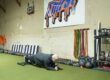
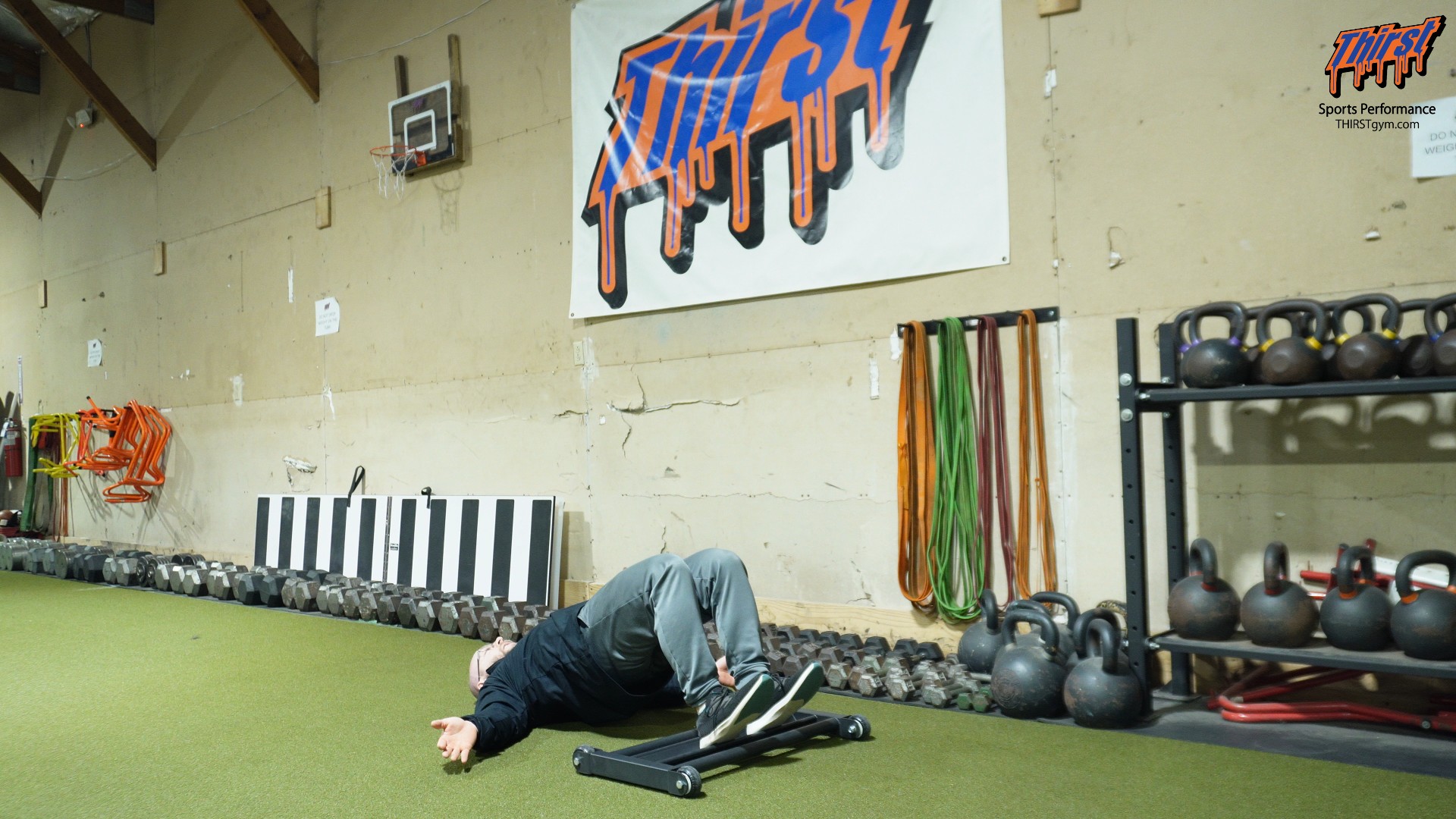
The glute ham roller leg curl is a supine (face-up) hamstring curl performed with a rolling apparatus tucked under your heels. From flat on your back, you dig your heels into the roller, curl your legs in by pulling the roller toward you, and simultaneously bridge your hips up toward the ceiling. That combination — the leg curl and the hip drive happening together — is what makes the movement so effective. You’re not just curling the roller in; you’re finishing each rep in a bridged, hips-tall position that forces the hamstrings and glutes to work through both of their jobs at once.
It’s an excellent substitute for a glute ham raise, an inverse curl, a TRX or suspension-strap leg curl, or a dedicated leg curl machine. If your gym is short on hamstring equipment — or you’re training at home — this movement gives you a legitimate, scalable option without needing a rack full of specialty gear.
Equipment You’ll Need
The setup is refreshingly minimal. You’ll need a glute ham roller or a similar rolling apparatus, plus a few feet of clear floor space to move through the full range of motion. Many glute ham rollers, including the one I use, come with built-in notches or grooves designed to lock your heels in place, which makes the whole exercise far more stable and lets you focus on the work instead of chasing the roller across the floor. If your roller doesn’t have those notches, don’t sweat it — simply set your heels on top of the roller as securely as you can and go from there.
(Affiliate note — keep or cut: if you want to point readers to a quality roller or other hamstring tools, this is a natural spot to link your EliteFTS affiliate. — Brandon)
The Muscles You’re Actually Training
The obvious target here is the hamstrings, and they get worked hard. But because of the bridging component, this movement recruits far more of the posterior chain than a machine curl ever could.
Hamstrings
The hamstrings drive both halves of the rep — the knee flexion as you roll in and the hip extension as you bridge up. Because both functions are trained together, you’re building strength in a pattern that carries over directly to sprinting, jumping, and heavy pulling.
Glutes
The hip bridge at the top of each rep means the glutes are heavily involved in extending the hip and holding you tall. This makes the exercise a genuine posterior-chain builder rather than an isolated hamstring movement.
Calves and Stabilizers
Your calves help anchor your heels into the roller, and the smaller muscles around your hips and core work to keep your pelvis level and your body moving in a straight line. The result is a movement that trains the back of your body as a coordinated unit.
How to Perform the Glute Ham Roller Leg Curl
Start by placing the glute ham roller on the floor and lying down on your back in a supine position with your heels locked into the roller. Begin with your legs relatively straight — this gives you the longest possible range of motion and sets up a strong stretch on the hamstrings before you curl.
From there, dig your heels firmly into the roller. As you begin to roll the apparatus toward you, simultaneously bridge your hips up toward the ceiling. This is the single most important coaching cue in the entire movement: the roll and the hip drive happen together, not separately. You’re not just dragging the roller in along the ground — as you curl, your glutes and hamstrings fire to lift your hips, and you finish each rep bridged and tall.
Reverse the motion under control, rolling back out to that long, nearly straight-leg position while keeping your rear end just barely off the floor throughout the set. Staying elevated the whole time keeps constant tension on the hamstrings and prevents you from resting between reps. Aim to get as long as you can on the way out, and drive the hips up as you curl back in. Done correctly, you should feel this working deeply in your hamstrings from the very first rep.
Common Mistakes to Avoid
The most common error is treating this like a pure leg curl and skipping the hip drive entirely. If you simply roll the apparatus in and out while your hips stay pinned to the floor, you turn a full posterior-chain movement into a watered-down curl and lose most of the benefit. The hips must rise with every rep.
The second frequent mistake is letting the range of motion collapse. Lifters often stop rolling out before their legs are anywhere near straight, robbing the hamstrings of the lengthened, loaded position that makes this exercise so effective. Reach for full extension on the way out.
A third issue is resting the glutes flat on the ground between reps. Setting your rear end down releases the tension and lets momentum creep in. Keeping your butt just off the floor the entire set is what keeps the hamstrings honest.
Finally, watch for heels sliding out of position. If your roller doesn’t have notches, spend an extra second setting your heels securely before each set so you’re not fighting the apparatus mid-rep.
Progressions, Regressions, and Loading
One of the best things about the glute ham roller leg curl is how easily it scales to your ability. For the majority of people, simply performing as many quality repetitions as you can with body weight is a fantastic starting point. If you’re landing somewhere in the range of 10 to 15 solid reps, you’re in a great spot for building strength and control.
Once you can comfortably push toward 20 reps with clean technique, body weight has done most of what it can, and it’s time to add resistance or move to a more challenging variation. There are two easy ways to load the movement. You can place a weight plate or two on either side of the roller to add resistance to the curl, or you can set a weight plate across your lap to increase the demand on the hip drive. Both methods raise the intensity without changing the movement pattern, so you keep all the benefits while making the exercise harder.
If body weight is too difficult at first, you can shorten the range slightly and gradually work toward full extension over a few sessions, or reduce the reps per set and build volume over time. The movement meets you where you are.
How to Program It Into Your Training
The glute ham roller leg curl works best as an accessory or finishing movement rather than a primary lift. A simple, effective approach is two to three sets of as many quality reps as you can perform, placed at the end of a lower-body training day or a full-body session. Slotting it in toward the end lets you hammer the hamstrings once your heavier compound work is done, without compromising the bigger lifts earlier in the session.
If you’re loading the movement, you can be a bit more structured — for example, three sets in a moderate rep range with a plate on your lap, progressing the weight as those reps get easier. However you program it, the goal is to accumulate quality, full-range work over time. Consistency with this movement pays off in hamstring strength and resilience that shows up everywhere else in your training.
Who Should Be Doing This Exercise?
The short answer is almost everyone, but a few groups stand to benefit the most.
Wrestlers and combat-sports athletes live and die by their ability to control positions, drive through their hips, and hold strong postures under fatigue — all of which lean heavily on the hamstrings and glutes working together. This movement trains that exact quality, and it can be done anywhere with minimal equipment, which matters for athletes who travel or train in less-than-ideal facilities.
Powerlifters and strength athletes get a direct carryover to the deadlift, since the combined knee-flexion and hip-extension pattern reinforces the same musculature that finishes a heavy pull. It’s a low-cost, high-value accessory for a bigger, more stable posterior chain.
Field- and court-sport athletes — anyone who sprints, cuts, and jumps — benefit from stronger, more durable hamstrings, which are among the most commonly strained muscles in explosive sport. Building strength through a full range of motion is one of the best insurance policies against those injuries.
General fitness clients and older adults can use the body-weight version to build meaningful lower-body strength and hip control without loading a barbell, making it a safe, scalable entry point into serious hamstring work.
Final Thoughts
The glute ham roller leg curl proves that you don’t need a machine-filled gym to build strong, resilient hamstrings. With nothing more than a roller and a little floor space, you can train the hamstrings the way they’re actually meant to work — flexing the knee and extending the hip at the same time — while getting real posterior-chain strength that carries over to sport and life. Start with body weight, chase full range of motion, keep those hips driving up on every rep, and add load once you’ve earned it. Do that consistently, and you’ll build hamstrings that hold up when it counts.