
Tall Kneeling Single Arm High Band Row: Build Rowing Mechanics, Core Control, and Hip Position
Most people who walk into a gym for the first time have no idea how to row. They know the machine looks like it should work the back, so they sit down, grab the handle, and yank it toward their body using every joint they own. Shoulders shrug, low back arches, head pokes forward, and the muscles that were supposed to do the work barely participate. The pattern gets repeated for years until it becomes the only way they know how to pull.
The tall kneeling single arm high band row is one of the cleanest ways to fix that problem before it becomes permanent. It’s a simple, low-cost, low-equipment exercise that strips away the compensations and forces a lifter to pull with the correct structure. It isn’t flashy, and it isn’t going to pack size onto your upper back. What it will do is teach a beginner or young athlete how to keep a rigid torso, hold their hips underneath them, and drive the elbow back without letting the rest of the body cheat.
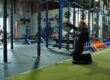
Watch the video below on how to maximize this exercise.
What the Tall Kneeling Single Arm High Band Row Actually Trains
On the surface this looks like a back exercise, and the upper back does get work. The lats, rhomboids, mid and lower traps, rear delts, and the elbow flexors all contribute to pulling the band from high to low. But calling it a back exercise undersells what’s actually happening.
The real value sits below the ribcage. Because you’re kneeling on both knees with the hips pushed forward, the glutes and hamstrings have to work continuously just to keep you upright and stacked. There’s no chair, no bench, no wide base of support to lean on. The moment those muscles shut off, the pelvis rolls forward, the low back arches, and the position falls apart.
At the same time, pulling with one arm creates an anti-rotation demand. The band is trying to pull your torso into rotation and pull you back toward the anchor point. Your obliques, rectus abdominis, and deep core musculature have to resist that. So while the athlete thinks they’re doing a row, they’re actually getting a rowing pattern, a core stability challenge, and positional hip work all in one movement. That’s a lot of value packed into an exercise that requires one band and a pad for your knees.
Equipment You Need
The setup is intentionally minimal. You need a resistance band and an anchor point that puts the band at roughly head height when you’re standing. A squat rack upright, a power rack crossmember, a wall anchor, or a sturdy pole all work fine. A folding mat or an Airex pad under the knees makes the position tolerable, especially on turf or hard flooring, and comfort matters more than people admit. If your knees hurt, your attention goes to your knees instead of the movement you’re trying to learn.
That’s the entire equipment list. This makes the exercise ideal for coaches working with large groups, athletes training at home, travel situations, and any setting where cable machines aren’t available or aren’t practical.
How to Set Up the Tall Kneeling Single Arm High Band Row
Anchoring the Band and Finding Your Distance
Secure the band at about head level relative to your standing height. Once you drop into the kneeling position, the band will be pulling down toward you at an angle, which is exactly what you want. This creates the high-to-low pulling path that makes the exercise different from a standard horizontal row.
From there, scoot back until there is tension on the band before you ever start the first rep. This is the step most people rush. If the band is slack at the start, the first third of every rep is wasted motion and the core never has to resist anything until you’re already moving. Set your distance so the band is loaded from the very beginning, and keep that tension throughout the entire set.
Getting the Grip Right
You can use a standard handle attachment if you have one, but there’s a simpler option that many lifters prefer. Place your hand through the band, bring it back around, and wrap it to create a self-made handle. This locks the band to your hand so you’re not gripping with a death grip just to keep from losing it mid-set. When you don’t have to worry about the band slipping, you can actually focus on the pulling mechanics, which is the entire point of the exercise.
Getting Into a True Tall Kneeling Position
Tall kneeling means both knees on the ground with the toes dug in behind you and the hips pushed forward so the body is stacked from knee to shoulder. Ribs down, glutes squeezed, hips extended. You should feel the glutes and hamstrings engage immediately just to maintain the position — that feedback is not a side effect, it’s the point.
The free hand can rest on the waist, hang at your side, or reach forward. None of those options is wrong. Pick whichever one lets you stay relaxed and focused on the working side, and be consistent about it so the setup is repeatable from set to set.
Executing the Rep
With the band under tension and the torso stacked, drive the elbow back and down, pulling the band all the way to your side. Think about leading with the elbow rather than pulling with the hand — this cue alone eliminates a huge amount of biceps-dominant pulling and gets the upper back to fire properly.
Keep the torso rigid the entire time. The chest shouldn’t rotate open toward the working arm, the shoulders shouldn’t shrug toward the ears, and the low back shouldn’t arch to help the arm travel farther. Every inch of range of motion should come from the shoulder blade and the arm, not from the spine.
Control the return. The band wants to snap you back into position, and letting that happen gives away the anti-rotation work that makes this exercise worth doing. Resist the band on the way out, reset your position if you drifted, and then perform the next rep.
Common Mistakes and How to Fix Them
The most common error is arching through the low back. As the athlete pulls, they extend the lumbar spine to create the appearance of more range of motion. The fix is to cue ribs down and glutes on before the set starts, and to reduce band tension if the position still can’t be held.
The second mistake is sitting back on the heels instead of holding true tall kneeling. This turns the exercise into something much easier and removes the hip and glute demand entirely. If an athlete keeps collapsing back, it’s usually a sign they need to spend more time earning the position rather than adding reps.
The third is rotating the torso toward the band. When the pull gets hard, the body’s instinct is to turn into it and use the whole trunk as a lever. Filming a set from the front makes this obvious instantly, and most athletes clean it up once they see it.
The fourth is using too heavy a band. This exercise is about mechanics and position, not load. The moment band tension is high enough to distort the position, it’s counterproductive. Go lighter than your ego wants and execute perfectly.
Where It Fits in the Rowing Progression
This movement sits at a specific spot in a logical progression, and understanding that placement is what makes it useful rather than just another random exercise.
Below it is the half kneeling variation, with one knee down and one foot forward. The half kneeling position offers a wider, more stable base of support and is the right starting point for someone who is brand new to structured training or who can’t yet hold a rigid torso under any load.
Once the movement pattern is clean in half kneeling, tall kneeling is the next rung. Taking the front foot away narrows the base, removes the stability that foot was providing, and demands that the athlete actually own their hip position rather than propping themselves up. That’s the progression: half kneeling teaches the pattern, tall kneeling teaches the athlete to hold the pattern without help.
Above it are standing single-arm variations, cable and machine rows with meaningful load, chest-supported rows, dumbbell rows, and eventually the heavier, high-tension pulling work that builds real size and strength. The kneeling band work is a bridge, not a destination.
Programming the Tall Kneeling Single Arm High Band Row
For young athletes and true beginners, eight to twelve repetitions per arm works well. That rep range gives enough time under tension to feel the pattern and enough repetitions to learn from without the position degrading from fatigue. Complete all reps on one side, then switch arms.
One to three sets per side is typically plenty. This is not a movement you should be grinding through for high volume. Once the position starts breaking down, the exercise has stopped doing its job and further sets are just accumulating bad reps.
It also functions well as a warm-up or preparatory movement. Slotting one or two sets into the general warm-up before a pulling day gives the athlete a positional reminder, gets blood into the upper back, and reinforces the mechanics you want to see carried into the heavier work that follows. For coaches running group settings, it’s an efficient way to get a whole room doing something productive with nothing but a handful of bands.
Who Should Be Using This Exercise
This is primarily a tool for people who are new to strength training and for young athletes. Both groups need the same thing: clean movement patterns established early, before bad habits get reinforced under load. Giving a fourteen-year-old wrestler or a brand-new general population client a way to feel what a correct row should feel like pays dividends for years.
It’s also useful for athletes returning from a layoff who need to re-establish position before returning to heavy work, and for anyone whose training history has produced a rowing pattern that’s heavy on shrugging and light on actual upper back involvement.
The other group worth mentioning is older adults and clients who need positional work but can’t tolerate heavy loading. The band provides accommodating resistance that’s easiest at the start of the range, and the kneeling position delivers glute and hamstring work without requiring a loaded squat or hinge.
Setting Honest Expectations
This needs to be said clearly, because it’s where a lot of exercise recommendations go wrong: the tall kneeling single arm high band row is not going to build slabs of muscle. It isn’t designed to. Band tension is limited, the position caps how much load you can handle, and the rep ranges are built around motor learning rather than hypertrophy.
What it does is clean up mechanics, teach midsection rigidity, and reinforce hip position — and it does those things better than most loaded alternatives, precisely because the load is low enough that the athlete can actually pay attention to what they’re doing. If the glutes and hamstrings end up working overtime while you’re rowing, that’s free positional work on top of the primary goal.
Master this, then move on to the harder variations. That’s how progressions are supposed to work. Simple exercise, specific job, clear next step.