
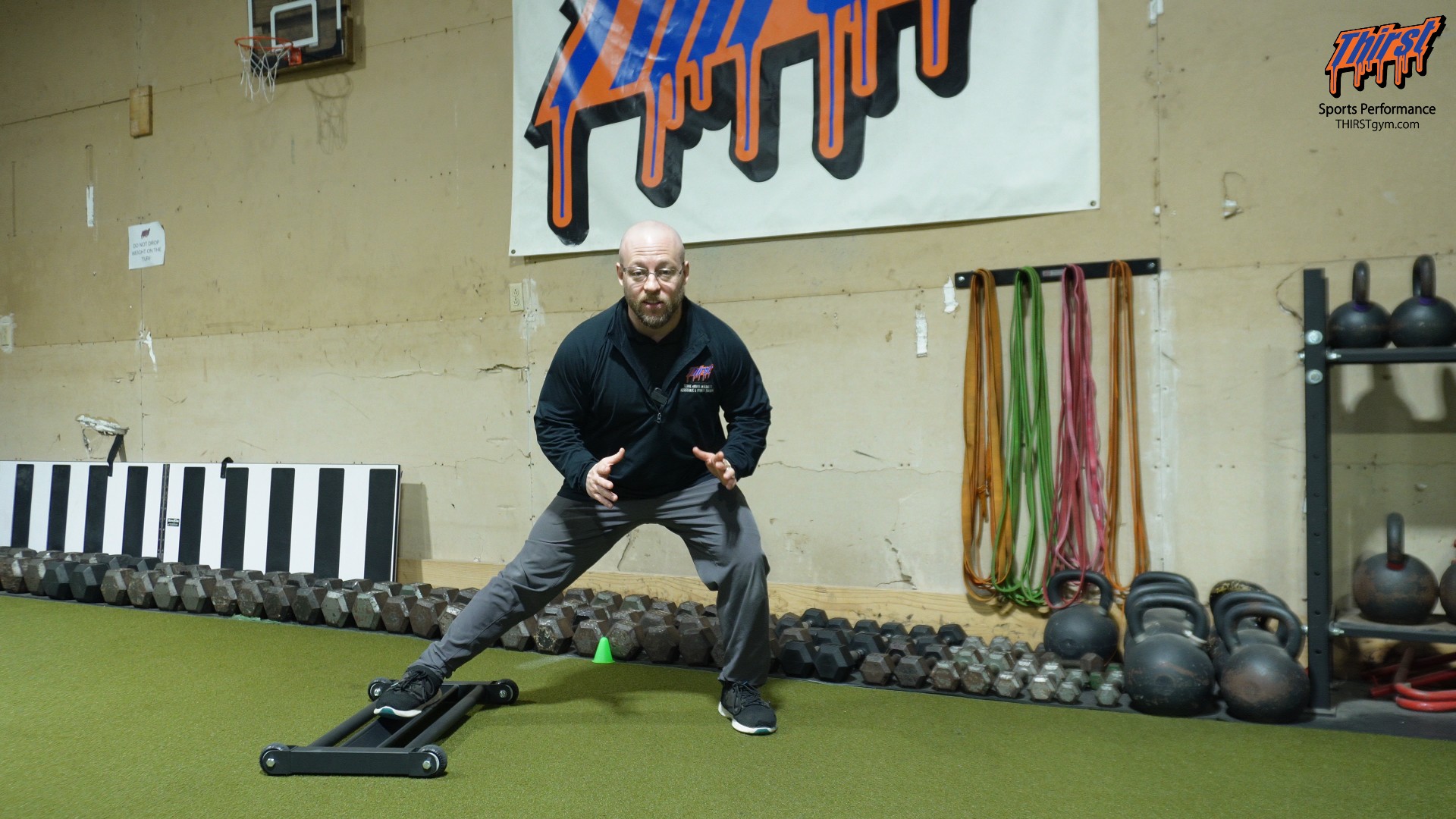
The Glute Ham Roller Lateral Lunge: Build Adductor Strength, Hip Mobility, and Frontal Plane Power
Most lower-body training lives in one direction. We squat, we hinge, we lunge forward and back — all in the sagittal plane. But athletes don’t compete in a straight line, and neither should their training. If you want stronger adductors, more usable hip mobility, and the kind of lateral stability that holds up when you have to plant, cut, and change direction, you need to spend deliberate time moving side to side under load. The glute ham roller lateral lunge is one of the most effective tools for doing exactly that, and it packs a surprising amount of value into a single movement.
This is a frontal plane exercise that trains adductor mobility and strength, loads the glutes and the back hip, and challenges single-leg stability all at once. It’s simple to set up, scalable for nearly any athlete, and it fills a gap that most lower-body programs leave wide open.
Watch the video below on how to maximize this exercise.
What the Glute Ham Roller Lateral Lunge Trains
The obvious target here is the adductor group — the muscles along the inside of the thigh that pull the leg back toward the midline of the body. As you push the working leg out to the side, those adductors lengthen under tension, which builds mobility and strength through a long range of motion at the same time. That combination matters. Passive stretching alone can improve how far a joint moves, but it doesn’t teach the muscle to produce force in that lengthened position. This exercise does both.
But the adductors are only part of the story. The leg that stays planted on the ground is doing real work too. As you slide out and reach long, the down-stance leg has to control the descent and then contribute to pulling you back to the start. That means the glutes and the muscles around the back hip are loaded throughout, and the whole movement demands single-leg strength and stability to keep you balanced and organized. You’re essentially getting adductor development, glute and hip loading, and unilateral stability training rolled into one clean pattern.
Because the movement happens in the frontal plane, it also carries direct transfer to any athlete who has to move laterally. Change of direction, shuffling, cutting, defensive slides, sprawling in a wrestling match — these are all frontal plane demands, and they’re precisely the qualities this exercise develops.
The Equipment You Need
The setup is minimal. You need a little bit of open floor space and a glute ham roller or a similar sliding product. Some rollers, like the one from EliteFTS, have a built-in divot in the middle that cradles your foot and keeps it locked in place through the movement. If yours is flat, that’s perfectly fine. As long as you can get your foot securely onto the roller and slide it out and back without it kicking out from under you, the equipment will do its job.
From there, you have plenty of options for adding load. The most common approach is to hold a single dumbbell on the same side as the working leg — so if the roller is under your right foot, the dumbbell sits in your right hand. That offset loading actually increases the demand on the adductor and hip of the working side, which is often exactly what you want. You can also load it with two kettlebells held at your sides for a more balanced feel, or a sandbag held at the chest if you’d rather keep the load higher and more central. Each variation changes the challenge slightly, so it’s worth experimenting to find what fits the athlete and the goal.
How to Perform the Glute Ham Roller Lateral Lunge
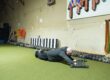
Start by placing the roller on the ground and setting one foot onto the middle of it. That’s your working leg. The opposite foot stays planted firmly on the floor — this is the leg that doesn’t move, and it serves as your anchor. Begin with the roller foot positioned underneath you, close to your base, in a tall, athletic posture.
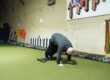
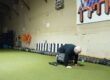
From here, push the roller foot away from you laterally, sliding it out to the side while keeping your chest up and tall. The goal is to get as long as you can, reaching that working leg out until you feel a strong stretch through the adductor and groin region. As you descend, the planted leg bends and loads, sinking you into that back hip. Throughout the reach, keep the knee of the down-stance leg tracking relatively over the foot — you don’t want it caving inward or drifting far past the toes.
Once you’ve reached your usable end range, reverse the movement by driving through the working leg’s adductor and using the down-stance leg to pull yourself back to the start position. The cue here is to reach long, then pull yourself back up and in toward the midline. Return to that tall, organized starting posture, reset, and repeat.
Coaching Cues That Make or Break the Movement
The single most important cue is to keep the chest up tall. A little bit of forward lean is completely fine and even natural as you load the hip, but the movement falls apart the moment you start folding forward at the waist. When the torso collapses, you shift the load out of the hip and adductor and into your lower back, and you lose the athletic position that makes this exercise valuable in the first place. Think about staying in an athletic stance — the same posture you’d want if you were guarding an opponent or preparing to move in any direction.
The second cue is to control the range. This is a mobility exercise as much as a strength exercise, so you want to reach as long as you comfortably can while keeping the down-stance knee stacked over the foot. Chasing extra range by letting the knee cave in or by rounding the torso doesn’t buy you anything — it just moves the stress to places you don’t want it. Find your honest end range and own it, then expand it over time.
Finally, be deliberate about the return. It’s easy to fall back on momentum to bounce out of the bottom, but the whole point is to make the adductor and glute do the work of pulling you back to center. Slow the movement down enough that you feel those muscles actively contributing on the way up.
Common Mistakes to Avoid
The most frequent error is exactly what the chest cue is meant to prevent: bending too far forward and turning the exercise into a good-morning on one leg. If you find your torso dropping toward the floor, reduce your range or lighten the load until you can maintain a tall posture.
The second common issue is letting the down-stance knee collapse inward. This usually shows up when the load is too heavy or the athlete is reaching past their controllable range. Watch that knee — it should track over the foot, not dive toward the midline.
A third mistake is rushing the reps. Because there’s a stretch involved, some athletes bounce in and out of the bottom position to make it easier. That robs the exercise of both its mobility and its strength benefit. Move with intent, feel the stretch, and drive back deliberately.
Why the Frontal Plane Matters for Athletes
It’s worth emphasizing why lateral movement deserves a dedicated place in your program. The overwhelming majority of strength training happens in the sagittal plane — forward and backward. That’s not wrong, but it leaves a gap. Sport happens in every direction, and the ability to accept force, stabilize, and produce power moving laterally is what separates athletes who can cut and change direction cleanly from those who get exposed the moment they have to move sideways.
Strong, mobile adductors are central to that ability. They decelerate the leg during cutting, stabilize the pelvis during single-leg actions, and contribute to the explosive push-off that redirects your body. Athletes with weak or restricted adductors are more prone to groin strains and to leaking energy every time they change direction. Training this quality directly — as the glute ham roller lateral lunge does — builds resilience and performance at the same time.
Programming the Glute Ham Roller Lateral Lunge
This exercise fits best as an accessory or supplemental movement rather than a primary strength lift. A productive starting point is two to four sets of six to ten reps on each side. That rep range gives you enough volume to build strength and drive mobility improvements without turning the set into a purely endurance effort, and it keeps the quality high on every rep.
Load it according to the implement you have available and the athlete’s ability to maintain position. The moment technique breaks down — chest dropping, knee caving, range shrinking — the load is too heavy, and you’re better served backing off. Because this is a movement where position dictates value, err on the side of quality over the number on the dumbbell.
You can slot it into a lower-body day after your main squat or hinge work, pair it with other unilateral movements in a single-leg circuit, or use it during a dedicated mobility or movement-prep block. It also works well as part of a warm-up for athletes who need to prime the hips and adductors before lateral work.
Progressions and Regressions
If the full loaded version is too much, start with bodyweight only and focus on owning the range and the return before adding any external load. From there, you can introduce a light dumbbell or a pair of kettlebells and build up gradually.
To progress the movement, you can increase the load, slow down the tempo to spend more time under tension in the lengthened position, or add a brief pause at end range to build strength where the adductor is most stretched. There are also further variations of this pattern worth exploring down the road as your control and strength improve, but the standard version described here is more than enough to start seeing real gains in frontal plane movement and adductor strength.
Who Should Be Doing This Exercise
The short answer is nearly everyone, but it’s especially valuable for athletes who rely on lateral movement and change of direction — wrestlers and combat sports athletes, field and court sport athletes, and anyone whose sport demands cutting and agility. Powerlifters and general strength trainees benefit too, since healthy, strong adductors and good single-leg stability support the big lifts and reduce injury risk. Older adults and general fitness clients can use the bodyweight or lightly loaded version to build hip mobility and balance that carries directly into everyday movement.
Wherever you fall on that spectrum, the glute ham roller lateral lunge earns its place in the program. It’s a simple, scalable way to strengthen your adductors, improve hip mobility, load the glutes and back hip, and build the single-leg, frontal plane capacity that keeps athletes moving well.