
The Best Chest Exercises for Growth: A Biomechanics-Based Guide to Building a Bigger Chest
If you’ve been training chest hard for months or even years and the growth still isn’t showing up, the problem usually isn’t your effort. More often than not, it’s your exercise selection. Walk into almost any commercial gym and you’ll see the same scene play out: people grinding away on the exact same flat barbell bench press they’ve done since their very first workout, wondering why their chest looks the same as it did a year ago. Working harder on the wrong tools rarely fixes a development problem. Choosing better tools almost always does.
The good news is that building a fuller, stronger, more developed chest isn’t a mystery. Once you understand how the pec musculature is actually built and how it moves, the right exercises practically select themselves. This guide breaks down the five most effective chest exercises for hypertrophy, why each one earns its place, exactly how to perform it for maximum chest involvement, and how to assemble it all into a program that actually drives growth. Everything here is grounded in basic anatomy and biomechanical principles rather than gym folklore, so you’ll walk away understanding not just what to do, but why it works.
You can also watch the video below that goes along with this article.
Understanding the Chest: Anatomy That Drives Better Exercise Selection
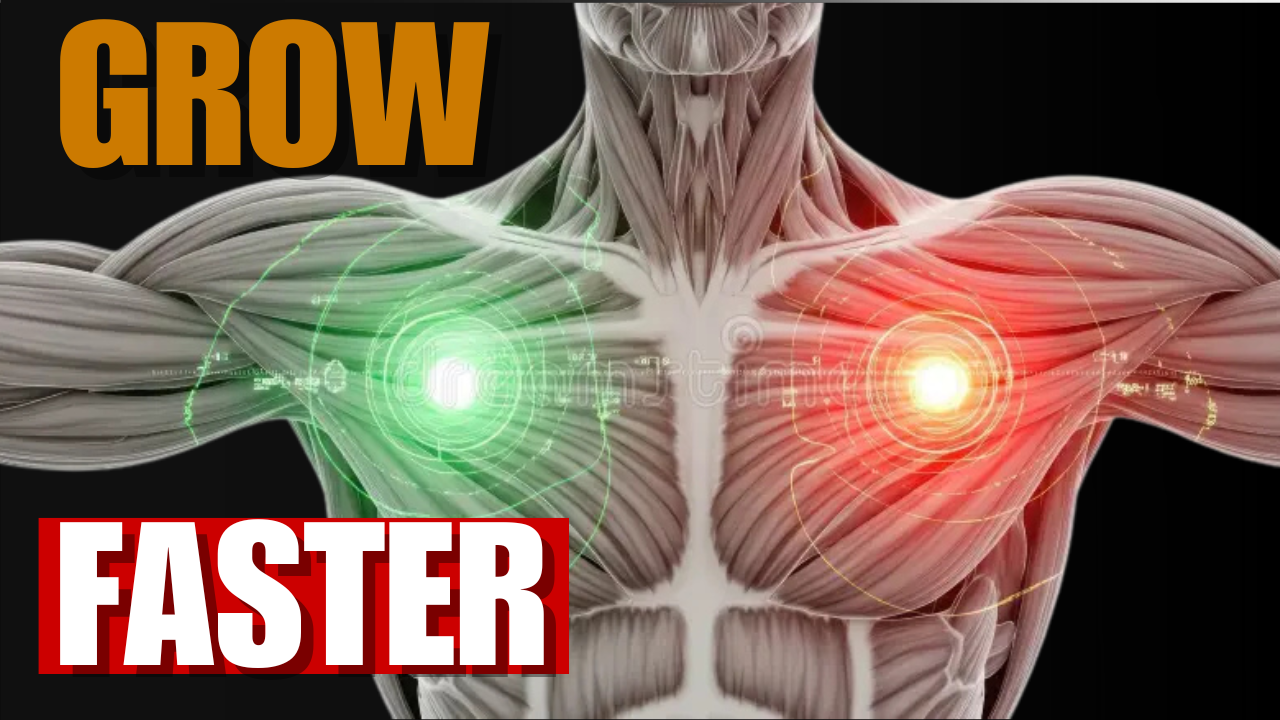
Before you can intelligently pick chest exercises, you need a working picture of what you’re actually training. Your chest is built primarily around the pectoralis major, a large fan-shaped muscle that dominates the front of your torso. While we often talk about the chest as a single slab of muscle, the pec major is functionally divided into two regions that respond to different angles of pressing and flying.
The first is the clavicular head, which originates up near the collarbone — the same clavicle you hear about athletes breaking — and makes up what most people refer to as the “upper chest.” The second is the much larger sternal head, which originates along the sternum and the ribs and makes up the thick middle-to-lower portion that gives the chest most of its visible size and mass. There’s also the pec minor, a smaller muscle sitting underneath the major. It isn’t a primary target for physique-focused training, but it’s worth knowing it exists, and it does get trained indirectly through your pressing and fly work.
Here’s the detail that changes everything about how you program: the fibers in these two regions run in different directions. The upper fibers angle downward from the clavicle, while the lower fibers angle upward from the sternum and ribs. Because of that fiber orientation, the angle at which you press or fly determines which region of the chest does the most work. A flat or low-to-high movement biases the sternal fibers; an incline or low-angle movement shifts more emphasis onto the clavicular fibers. This is why “just benching more” doesn’t build a complete chest. You have to train the muscle from multiple angles to develop all of it.
How the Pecs Actually Function
The primary job of the pectoralis major is horizontal adduction of the arm — in plain terms, bringing your upper arm across the front of your body toward the midline. It also contributes to shoulder flexion, raising the arm forward and up. Every great chest exercise is, at its core, some loaded version of one or both of these actions.
Once you internalize that, you have a built-in filter for evaluating any chest movement. The best exercises are the ones that load horizontal adduction through the fullest possible range of motion, keep tension on the muscle where it matters, and let the arm travel freely enough to actually express the muscle’s function. The five exercises below all check those boxes, and each one does something the others don’t.
Exercise #1: The Dumbbell Bench Press
The dumbbell bench press is the foundation, and it’s a deliberate choice over its more popular barbell cousin. This isn’t a knock on the barbell bench press — it remains a fantastic strength builder and there’s nothing wrong with keeping it in your program. But when the specific goal is building a bigger chest, dumbbells offer two advantages the barbell simply can’t.
First is range of motion. With a barbell, the bar stops at your chest, capping how far the weight can descend. With dumbbells, your hands can travel deeper and further apart at the bottom, producing a bigger stretch on the pecs under load — and a loaded stretch is one of the most potent stimuli for hypertrophy we know of. Second is the freedom of movement. Because each hand operates independently, you can actually bring the dumbbells together at the top, finishing the rep with genuine horizontal adduction. With a barbell, your hands are locked at a fixed width and that adduction component is largely removed. More range of motion plus more of the chest’s actual function equals more growth stimulus.
For most people, the flat dumbbell bench press is the most chest-dominant version and the best default. If you want to shift a touch more emphasis toward the upper chest, a slight incline of 15 to 30 degrees works well. Resist the urge to crank the bench up to 45 degrees or higher — at that point you’ve turned it into a shoulder exercise and biased the anterior deltoid far more than the pecs. Keep your elbows tracking at a moderate angle rather than flared straight out to the sides, control the descent, feel the stretch at the bottom, and squeeze the dumbbells toward each other as you press up.
Common mistakes: Cutting the range of motion short to use heavier dumbbells, bouncing out of the bottom, and pressing in a straight vertical line rather than slightly arcing the weights together at the top. Slow down, own the stretch, and let the chest do the work.
Exercise #2: The Cable Fly
The cable fly is one of the most underrated chest builders in the gym, and most lifters skip it in favor of the dumbbell fly. That’s a mistake. The reason comes down to the strength curve and constant tension.
With a dumbbell fly, resistance comes straight down via gravity. At the bottom of the movement you get a great stretch with plenty of tension, but as you bring the dumbbells together at the top, the line of resistance no longer matches the line of the muscle’s pull — and tension on the chest essentially disappears at the very point where the pecs are most fully contracted. The cable changes that completely. Because the resistance pulls horizontally along the cable line, you keep meaningful tension on the chest through the entire range — a deep, loaded stretch out at the bottom and a hard, fully-tensioned squeeze when your hands meet in front of you. Big stretch, constant tension, and lots of time under tension across the full range: that’s checking every box for maximizing hypertrophy.
Setup matters. If your cable machine lets you set the arms wide, use that width to get a bigger stretch and more horizontal adduction. To bias the upper chest, set the pulleys low and fly from low to high. To bias the middle and lower chest, set the pulleys high and fly from high to low. That adjustability is a big part of why the cable fly is so valuable — one machine lets you target every region of the pec by simply changing the angle.
A quality pec deck machine is an excellent substitute when cables aren’t available. It maintains constant tension and adds stability, and because your back is supported against the pad, it opens you up into a strong stretch. As you squeeze, think about driving your back into the pad and “hugging” something in front of you — that cue improves the mind-muscle connection dramatically. The one limitation is that a pec deck generally can’t be adjusted for upper-versus-lower emphasis the way cables can.
Common mistakes: Turning the fly into a press by bending and straightening the elbows, using so much weight that the stretch becomes uncontrolled, and rushing the contraction instead of pausing and squeezing at the top.
Exercise #3: The Incline Barbell Bench Press
When a barbell does earn a spot in a chest-building program, the incline version is often the smarter pick over the flat barbell bench — and the reason is, once again, range of motion. On a flat barbell bench, the bar is stopped by your chest before the pecs reach a full stretch. On an incline, the bar can travel to a deeper, more stretched position relative to the working fibers. (If you have access to a cambered bar or can create a deficit on flat bench, that helps too, but for most lifters the incline solves the range-of-motion limitation simply.)
Keep the incline at 30 degrees or less. A roughly 15- to 30-degree angle has been shown to do an excellent job targeting the upper chest fibers while still allowing heavy loading; steeper than that and you start dumping the work into the front delts again. Set up so the bar descends to a position where you feel a strong stretch across the upper chest, then drive it back up with control. Because the barbell lets you load heavy and stack on weight progressively, this exercise is your primary strength and overload driver for the chest. Research on chest development generally favors the incline barbell press over the standard flat barbell press for pure size when all factors are accounted for, which makes it an ideal heavy compound to anchor a session.
Common mistakes: Setting the bench too steep, letting the elbows flare excessively, and prioritizing the number on the bar over a full, controlled range of motion. Treat it as a heavy chest builder, not an ego lift.
Exercise #4: Chest-Focused Dips
Most lifters file dips under “triceps,” and yes, the triceps work hard on every dip. But with one simple adjustment you can turn dips into a serious lower and mid-chest builder that hammers the sternal fibers.
The key is the forward lean. A dip performed tall and upright — torso vertical, straight up and straight down — keeps most of the emphasis on the triceps. But if you lean your torso forward as you descend, almost as if you’re tipping over the front edge of the bars, you load the chest through a big stretch and shift the work onto the sternal fibers. Lean forward, sink into the stretch at the bottom, and drive yourself back up. Research has shown that with enough forward lean, sternal pec activation during dips can actually exceed what you’d get from a standard barbell bench press — which is a strong hint as to why so many powerlifters quietly rely on heavy dips. Done with that forward lean, dips build the triceps and the chest, and that carryover can translate into a bigger bench press as well.
Dips are also wonderfully scalable. If you need help, loop a band across the handles and place a knee in it for assistance. If you’re strong, hang weight from a dip belt and load the movement heavy — it responds extremely well to progressive overload. Make sure dips are in your program not just for bigger arms, but for a bigger chest.
Common mistakes: Staying too upright when the goal is chest, descending only a few inches instead of reaching a real stretch, and shrugging the shoulders up toward the ears at the bottom. Lean, stretch, and keep the shoulders down and back.
Exercise #5: The Push-Up (Yes, Really)
It’s easy to dismiss the push-up as a beginner’s exercise that can’t compete with heavy pressing. That’s a mistake, and the reason is scapular freedom. When you lie on a bench or the floor, your shoulder blades are pinned in place — they can’t move the way they’re designed to. With a push-up, your scapulae are free to protract, letting you reach all the way forward at the top of the rep. That extra reach produces a stronger chest contraction than a bench press allows, because you’re completing the muscle’s job rather than cutting it off against a bench.
To get even more out of the push-up, elevate your hands on parallettes, blocks, or a pair of dumbbells. This creates a deeper range of motion at the bottom — a bigger stretch — and dramatically increases the stimulus to the chest. The push-up is also infinitely scalable in both directions. Beginners can elevate their hands on a bench, a railing, or a set of stairs, or drop to their knees to find a manageable level. Stronger lifters can add load with a weight plate or a weighted vest, have a partner place a plate across the upper back, drape a band across the back for accommodating resistance at the top, or combine elevated hands (a deficit) with added weight for a brutal, high-stretch variation.
Don’t write off bodyweight push-ups as “not enough.” If you’re strong, the answer isn’t to abandon the movement — it’s to make it harder through deficits, added weight, band tension, and feet elevation. As a coach who spent years competing in powerlifting, I can tell you that few exercises have ever left my chest as sore and as thoroughly worked the next day as weighted deficit push-ups, and they were a genuine driver of my bench press strength. The push-up earns its place precisely because of this versatility — but only if you scale it correctly for where you are right now.
Common mistakes: Letting the hips sag or pike instead of holding a rigid plank, doing partial reps near the top, and treating it as filler rather than progressively overloading it like any other lift.
How to Program These Exercises for Real Growth
Knowing the best exercises is only half the equation. The other half is assembling them into a structure your body can recover from and progress on. Here’s a framework that works for the vast majority of lifters.
If you’re training chest twice per week, rotating through three to four of these exercises per session across the week will cover everything you need. To be clear, “twice per week” doesn’t mean two dedicated chest days — it means you’re folding chest work into two of your training days. That could easily be full-body sessions where two of those days include chest-focused movements and another day skips them entirely.
A simple way to organize it: start your first session with a heavy compound like the incline barbell bench press to drive strength and overload, then follow with a flat dumbbell bench press as a supplemental movement for range of motion and stretch. On your second session, you might run an incline dumbbell bench press or a standard barbell bench press, then finish with a cable fly or a push-up variation to add volume and hit the chest from a different resistance profile. That’s just a sample template, but it illustrates the principle: across the week you touch nearly every angle and every region of the chest rather than repeating the same pattern.
On total volume, the research consensus lands around 12 to 20 hard sets per week for most intermediate lifters. More advanced trainees may tolerate a bit more; beginners will grow on considerably less. Spread across two sessions, that works out to roughly 6 to 10 sets per session, which is very manageable from both a time and a recovery standpoint.
The single most important programming principle is this: don’t just stack four pressing movements and call it a complete chest day. Four presses all train the same general pattern through similar angles and leave large portions of the chest underdeveloped. Instead, deliberately cover different angles — flat, incline, low-to-high, high-to-low — and different resistance profiles — free weights, cables, and bodyweight. A press loads the chest one way, a cable fly another, a dip another, and a push-up another. Stacking those varied stimuli is exactly how you build a complete, fully developed chest rather than one that’s strong in a single position and flat everywhere else.
Putting It All Together
A bigger chest comes from training the muscle the way it’s actually built and the way it actually moves. Start with the anatomy: a clavicular head up top and a larger sternal head through the middle and lower chest, with fibers running in different directions that respond to different pressing angles. Pick exercises that load the chest’s core function — horizontal adduction — through a full range of motion with strong tension where it counts. Then rotate those exercises across the week so every region and every resistance profile gets its turn.
The dumbbell bench press gives you range of motion and adduction. The cable fly delivers constant tension across the entire range. The incline barbell bench press is your heavy overload driver for the upper chest. Chest-focused dips load the lower fibers under a deep stretch and carry over to your pressing strength. And the humble push-up — properly loaded and scaled — rounds it all out with free-moving scapulae and a powerful contraction. If your current program doesn’t include at least three of these movements, there’s a good chance you’re leaving real growth on the table.
Train smart, cover your angles, push for progressive overload over time, and the chest development will follow.
Need help improving your physique, building muscle, and/or losing fat? Contact us to see how we can help you!